How Professional Mold Remediation Services Restore Air Quality in Your Home

Mold growth is a common issue for many Colorado homeowners, especially in areas like Steamboat Springs, where changing temperatures, snowmelt, and humidity can create moisture inside homes.

Once mold begins to spread, it doesn’t just affect surfaces. It can also impact the air you breathe and the overall safety of your indoor environment. So understanding how professional mold remediation services work can help you protect your home and restore healthy air quality for your family.

Understanding how mold affects indoor air

Mold releases tiny spores into the air. These spores are invisible but can move easily through rooms, ventilation systems, and HVAC units. Over time, this can lead to:

• Musty indoor odors
• Irritation for occupants with allergies or respiratory sensitivities
• Spread of mold to previously unaffected areas
• Long-term damage to materials like drywall, insulation, and wood

Because mold can grow behind walls, under floors, and in crawl spaces, identifying the full extent of the problem often requires trained inspection and specialized equipment.

Why professional remediation matters

Many homeowners try to address mold with surface-level cleaning, but wiping visible patches does not remove the root cause. Professional remediation teams use industry-standard methods to address both the contamination and the moisture issues that created it.

Here are a few key advantages of hiring experts:

• Advanced moisture detection tools
• Containment systems that prevent spores from spreading
• Safe removal and cleaning processes
• Specialized air filtration and purification methods
• Long-term prevention recommendations

Working with trained professionals helps ensure the mold is removed safely and thoroughly, without risking additional contamination.

How experts restore healthy indoor air

Professional mold remediation follows a structured, step-by-step approach. This helps protect your home and restore indoor air quality effectively.

1. Comprehensive inspection

The team begins with a detailed assessment of the affected areas. They look for visible mold, hidden moisture, and any signs that the problem may have spread to other rooms. This helps determine the proper remediation plan.

2. Containment and protection

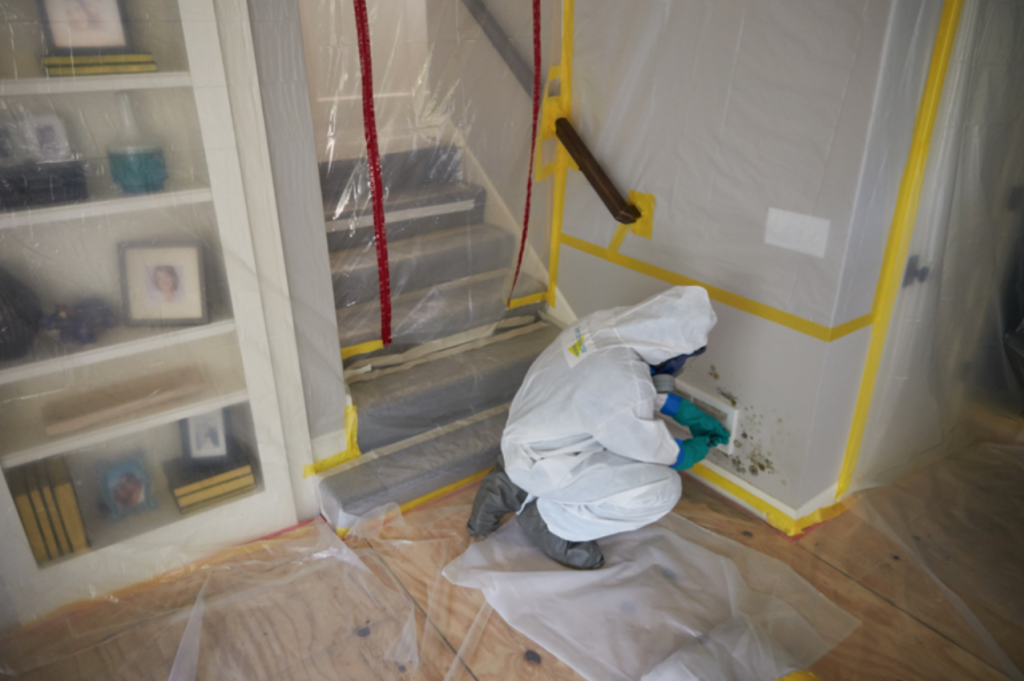
To keep mold spores from moving to clean areas, professionals set up containment barriers. These are often airtight plastic enclosures paired with negative air pressure systems, which help pull contaminated air out of the space instead of letting it travel through the home.

3. Air filtration and purification

High-efficiency particulate air (HEPA) filtration equipment is used to capture microscopic mold spores. This step is essential for improving indoor air quality and preventing recontamination. It also helps reduce odors and clears the environment for safe cleaning.

4. Removal of affected materials

Depending on the severity of the mold growth, professionals may remove damaged drywall, insulation, flooring, or other porous materials. Non-porous and semi-porous surfaces are cleaned and treated using safe, approved products designed for mold cleanup.

5. Cleaning and sanitizing

All surfaces in the affected area are thoroughly cleaned. This includes structural materials, furniture (when possible), and the surrounding space. In many cases, antimicrobial treatments are applied to discourage future mold growth.

6. Moisture correction and prevention

Because mold thrives in damp environments, professionals address the underlying moisture problem. This may involve improving ventilation, encapsulating crawl spaces, adjusting drainage, or recommending dehumidification solutions.

This complete process helps ensure your air quality improves and your home remains protected long after the remediation is completed.

Signs your home may need mold remediation

Homeowners in Steamboat Springs should stay alert to early warning signs. Here are some indicators that mold may be affecting your air and requiring professional help:

• Persistent musty smells in certain rooms
• Visible spots or discoloration on walls, ceilings, or floors
• Increased humidity indoors
• Allergy-like symptoms when spending time at home
• Any previous water damage from leaks, storms, or plumbing issues

Addressing these signs early can help prevent larger repairs later on.

A trusted local partner for Colorado homes

Colorado homeowners often want a team they can rely on during stressful situations. ServiceMaster Cleaning & Restoration has years of experience providing restoration and cleaning services across the region, including fire damage cleanup, water damage recovery, mold mitigation, and bio-hazard cleanup.

Our commitment to proper remediation, advanced equipment, and 24/7 emergency availability makes us a dependable resource when mold affects your home’s air quality.


Read More

Tips for Preventing Floods in Your Home

Tips for Preventing Floods in Your Home

A flood can have a devastating impact on your home. Floods can happen due to heavy rain storms, hurricanes, or accidents inside the house. A bad flood can ruin your foundation and make a home unlivable. According to Ruby Home Real Estate, about 14,000 people in the U.S. are affected by water damage daily. Read on for tips on how to prevent a call for emergency flood services.

Watch Forecasts

Pay attention to weather forecasts. If there is a serious likelihood of a heavy storm, especially a hurricane, take the time to prepare your home for the possibility of a flood. Quickly seal off any entryways, such as doors or windows. If you have a basement, inspect it for any vulnerable areas and make sure they are sealed.

Lift Your Home

If you live in an area with constant flooding or a high water table, you may want to consider lifting your home. When contractors lift your home, they raise it from its current foundation and make the existing one higher and stronger. Having your home on a higher foundation decreases the likelihood that the main house will flood. They can also make the new foundation as impenetrable as possible to avoid the need for emergency flood services.

Check Pipes

Sure, you stay on top of any plumbing inspections, but what happens if a pipe bursts? Have your local plumber check it out immediately. Even the smallest of leaks can eventually turn into a massive flood. Be aware of the weather as pipes can easily burst when they freeze over.

Seal Doors and Windows

Your doors and windows are easy targets for water rushing in from inclement weather. If a storm is approaching, you can immediately weatherstrip the edges. However, you should upgrade these entry points with storm doors and windows. Installing a steel or iron door may be expensive, but it can provide protection from intruders and weather. Double-pane windows are stronger than single-pane ones, so call your local window installers for an upgrade.

There are ways you can protect your property from floods. Use weather stripping, pipe inspections, or move into an area that’s not flood-prone. If you’re dealing with flood issues, contact us at ServiceMaster for our local emergency flood services today.

Read More

4 Common Causes of Water Damage in Homes

4 Common Causes of Water Damage in Homes

Your home is your sanctuary and a big investment, so the last thing you need is water damage. Understanding the common causes of water damage in homes is the first step in preventing it from occurring or having a devastating effect. According to Ruby Home Real Estate, about 14,000 people are affected by water damage daily. Read on to see how you can avoid being one of those people that needs a water removal service.

1. Faulty Appliances

It may surprise you, but your appliances can have a role in ruining your nice floors. A faulty hose in a fridge, washing machine, or dishwater can flood your floors and require action from a water removal service. An outdated water heater can leak as sediment builds up inside or it reaches its life cycle. Don’t sleep on regular inspections, and have a contractor make energy-efficient appliance updates to reduce the chances of leakage. You may even get a tax rebate for such appliance updates from the local or federal government at tax time.

2. Plumbing Fixtures

As water constantly moves throughout your pipes and drains, age, clogs, and other mishaps can result in leaks. Toilets can overflow due to a sewer backup or someone may accidentally forget they are running water in the plugged-up tub or sink. A small crack may turn into a busted pipe, often resulting in major leaks. That’s why you should make sure your pipes have the necessary padding, and inspections to make sure everything is in compliance.

3. Storms

Heavy storms mean wet weather and winds that may damage roofs and windows. This creates an ideal situation for water to find its way into your home through several entry points such as the basement, attic, windows, and more. Take preventative measures by checking for cracks or gaps, especially near entry points like windows and doors.

4. Roof Damage

A leaky roof is more common than many homeowners would like. The type of roofing material, the age of the roof, and the last time you had an inspection all affect how easily water can come in. You may not notice damage from looking at your roof from the outside of your home, but dark and wet stains may appear on the ceiling and upper wall area.

Water damage can ruin your home’s foundation and the valuable possessions you have inside. From weather and bad appliances to human error, water damage can strike anytime. Contact our local water removal service at ServiceMaster if you need help with this issue.

Read More